Facebook Ads vs Google Ads: Which Is Better for Small Business?
For small businesses looking to grow online, digital advertising is one of the most effective ways to reach potential customers. Among the many advertising platforms available today, Facebook Ads and Google Ads are two of the most popular choices. Both platforms offer powerful tools to promote products and services, but they work in different ways and serve different marketing goals. Understanding their strengths and differences can help small business owners decide which platform is better suited for their needs.
Understanding Facebook Ads
Facebook Ads (now part of **Meta Platforms advertising) allow businesses to promote their content across social media platforms like Facebook, Instagram, and Messenger. The main strength of Facebook Ads lies in its advanced audience targeting. Businesses can target users based on demographics, interests, behaviors, location, and even life events.
For example, a small clothing store can show ads specifically to women aged 18–35 who are interested in fashion and live within a certain city. This level of targeting makes it easier for businesses to reach people who are more likely to be interested in their products.
Another advantage of Facebook Ads is the visual nature of the platform. Businesses can use images, videos, carousels, and interactive formats to showcase their offerings. These visually engaging ads help capture users’ attention while they are scrolling through their social media feeds.
Facebook Ads are also known for being relatively affordable, especially for small businesses with limited budgets. Advertisers can start with a small daily budget and gradually scale their campaigns based on results. Additionally, Facebook provides detailed analytics that help businesses track impressions, clicks, conversions, and engagement.
However, Facebook Ads are generally considered interruption-based marketing. Users are not actively searching for products when they see ads; instead, ads appear while they are browsing social media. This means businesses often need creative and compelling ad content to grab attention and generate interest.
Understanding Google Ads
Google Ads, created by Google, works differently. It primarily focuses on intent-based advertising. When users search for something on Google Search, ads appear at the top of the search results related to the keywords they typed.
For example, if someone searches for “best bakery near me,” a local bakery running Google Ads can appear at the top of the results. This means the user already has an intention to buy or find a service, making them more likely to convert into a customer.
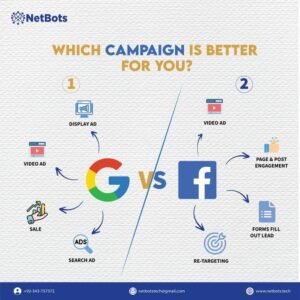
Google Ads offers several advertising formats, including:
Search Ads
Display Ads
Shopping Ads
Video Ads on YouTube
Search ads are especially powerful for small businesses because they target users who are actively looking for specific products or services. This high purchase intent often results in higher conversion rates compared to many other advertising platforms.
Google Ads also provides strong geographic targeting, which is helpful for local businesses such as restaurants, repair services, and clinics. Businesses can show ads only to people within a specific area, ensuring their budget is spent on relevant audiences.
However, Google Ads can be more competitive and expensive, especially in industries like finance, legal services, or insurance where many companies bid on the same keywords. Small businesses may need careful keyword research and budget management to avoid overspending.
Key Differences Between Facebook Ads and Google Ads
One of the biggest differences between the two platforms is user intent. Google Ads targets users who are actively searching for something, while Facebook Ads target users based on interests and behaviors.
Another difference is ad format and engagement style. Facebook Ads focus heavily on visual content and storytelling, making them ideal for brand awareness and product discovery. Google Ads, on the other hand, are more focused on solving a specific need at the moment someone searches for it.
Cost structure also differs. Facebook Ads usually offer lower cost-per-click (CPC), making them attractive for small businesses with tight budgets. Google Ads may have higher CPC but often deliver more qualified leads because users already have buying intent.
Additionally, Facebook Ads provide stronger audience targeting capabilities through social data, while Google Ads excel at capturing demand through search queries.
Which Platform Is Better for Small Businesses?
The answer depends largely on the business goals.
If a small business wants to build brand awareness, reach new audiences, and visually showcase products, Facebook Ads can be highly effective. Businesses such as fashion brands, fitness coaches, restaurants, and lifestyle products often perform well on social media advertising.
On the other hand, if the goal is to capture customers who are actively searching for a product or service, Google Ads may deliver better results. Service-based businesses such as plumbers, electricians, lawyers, or medical clinics often benefit greatly from search ads.
In many cases, the best strategy is using both platforms together. Facebook Ads can create awareness and interest, while Google Ads can capture users who later search for the brand or product. This combination helps build a complete marketing funnel from discovery to purchase.
Conclusion
Both Facebook Ads and Google Ads are powerful advertising platforms that can help small businesses grow. Facebook Ads are ideal for audience targeting, brand awareness, and visually engaging promotions, while Google Ads excel at capturing high-intent searches and generating immediate leads.
Rather than choosing one platform exclusively, small businesses should consider their marketing objectives, budget, and target audience. By understanding how each platform works and using them strategically, businesses can maximize their advertising results and achieve sustainable growth in the digital marketplace.